

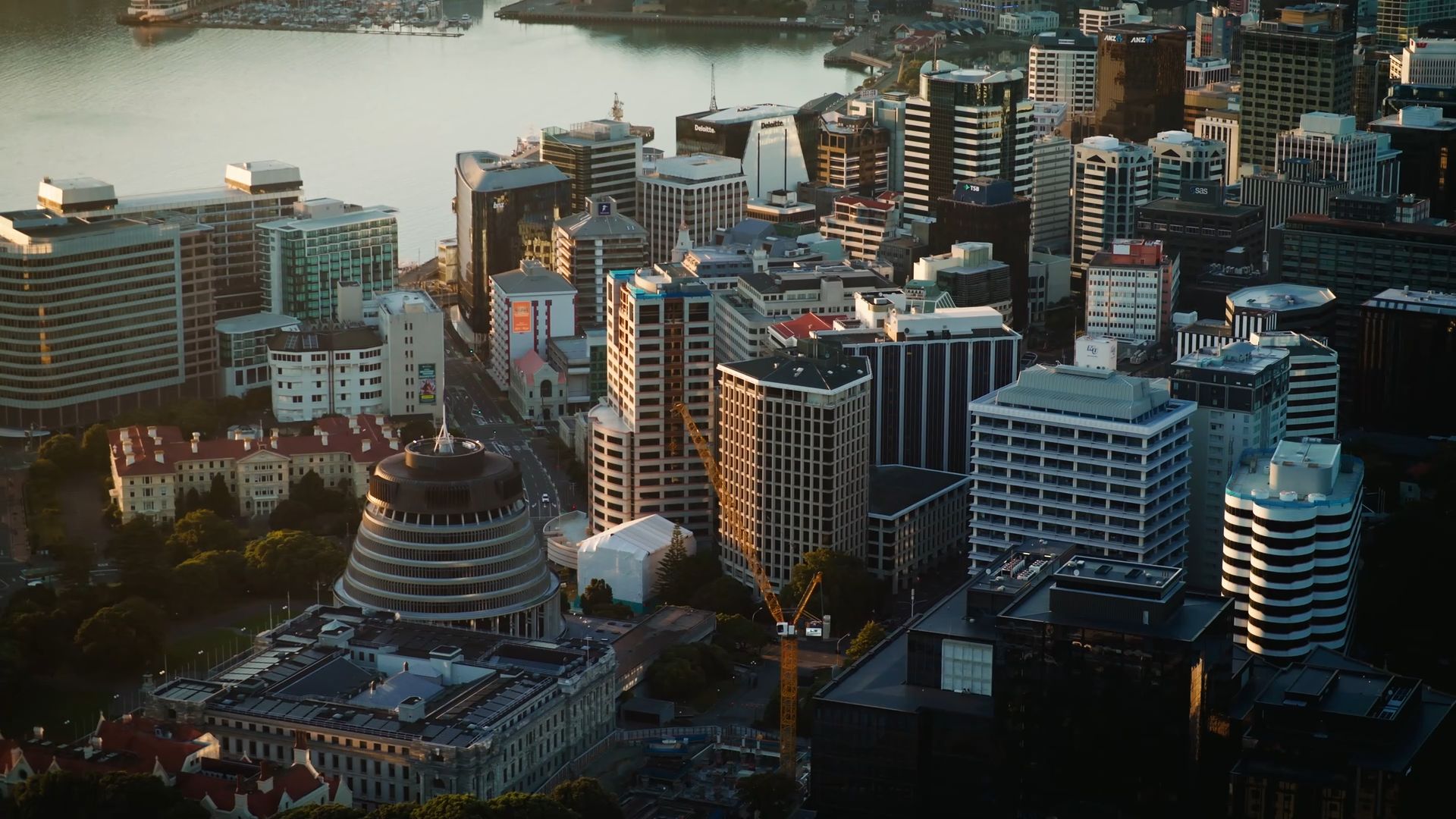
Long-lens drone cinematography: shooting aerials at 90mm and 250mm
Most drone footage is shot wide, because wide is forgiving. Put a long lens on the drone and the image changes character completely: backgrounds stack up behind the subject, movement becomes deliberate, and the camera can feel close to the action while the drone stays a long way back. Long-lens aerials are our favourite thing to shoot. Here’s why, and how we do it.
What a long lens gives you
- Compression. Mountains, city lights or weather sit right behind the subject instead of shrinking into the distance.
- Slow, readable parallax. A small lateral move at 250mm makes layers slide past each other in a way a wide lens can’t.
- Intimacy at a distance. A mid-shot of talent from a drone that is well away from them, so there’s no rotor noise or downwash in their performance.
- A different visual language. Aerials that match the lensing of the rest of the film, rather than announcing “drone shot”.
“They handled everything from epic scenics shot with a 200mm lens to tracking our talent at ground level in a mid-shot.”
Justin Hawkes, Director, Workparty
Why it’s hard
Everything a wide lens hides, a long lens magnifies. Tiny vibrations and gimbal corrections become visible shake. A breath of wind moves the frame. Focus at a distance is unforgiving, and keeping a moving subject in a narrow field of view takes practice from both the pilot and the camera operator.
How we rig it
Our main platform is the DJI Inspire 3 with the full-frame X9 camera. For everyday work we use DJI’s 24mm, 35mm, 50mm and 75mm primes. Beyond that we carry two long lenses:
- 90mm. It’s stable and gives us full control. With wireless focus and a few takes, we can get very close to fast-moving subjects.
- Vintage Minolta 250mm. It mounts with a custom 3D-printed attachment and custom weights to balance the gimbal. This setup loves a fine, calm day.
Focus is the craft. With the 250mm we often set focus at roughly 50 m and find the subject by moving the drone closer or further away, rather than racing the focus ring. With the 90mm, a focus puller on a three-channel wireless follow focus (focus, iris and zoom) keeps the subject sharp while the pilot and camera operator concentrate on the move.
Planning a long-lens aerial
- Distance and sightlines. The drone may be hundreds of metres from the subject, so check there’s a clear line between them, and that the pilot can still see the drone.
- A weather window. Calm air matters more than for any other aerial. Build in flexibility on the day.
- Light. Low sun and atmosphere suit compression; plan around the sun path.
- Rehearsals. A couple of passes to agree the speed of the move with talent, the focus puller and the camera operator.
- Permissions. Distance doesn’t remove the rules about what’s underneath the drone. See our permits guide.
See it in action
Our Wellington reel features the 250mm, and long-lens work runs through our drama reel. Browse the full video selection, or see the full lens and filter kit.
Planning a shoot? Tell us about your locations, dates and shots and we’ll come back with ideas and a quote.
Contact Us

