
Echo Valley · · 6 min read
Dual-op means two people fly one drone: a pilot flies the aircraft and a camera operator runs the camera. It sounds like a small change. On set, it changes how complex the shot can be, how safely it’s flown and how quickly it’s in the can.
What is dual-op?
With a single operator, one person flies the drone and frames the shot at the same time: two thumbs doing the work of a crane operator and a camera operator. Dual-op splits that job in two.
- The pilot flies the aircraft: the line, height and speed of the move, and everything around it – obstacles, wind, battery, the airspace and the people underneath.
- The camera operator has their own controller and monitor and runs the gimbal and camera: pan, tilt, framing, exposure and recording.
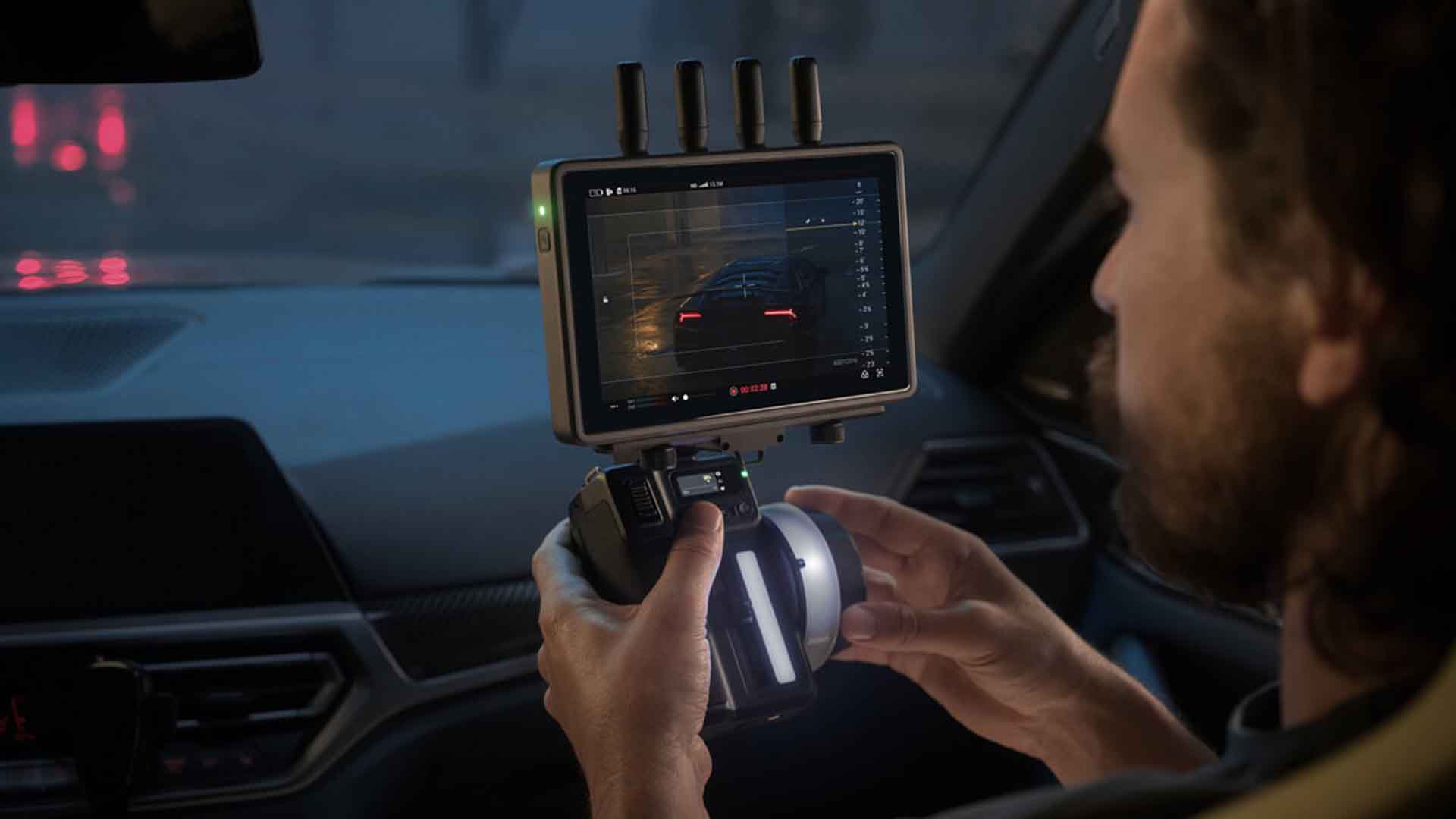
- A focus puller joins when the shot needs one. With a long lens, a shallow depth of field or a subject moving towards or away from camera, a third operator pulls focus and iris wirelessly from a hand unit and monitor. That can be our focus puller or your 1st AC.
On our DJI Inspire 3, each controller gets its own live feed and controls its part of the aircraft independently, so the pilot and camera operator can each stand wherever gives them the best view of their job.
It’s not only about the big moves
Dual-op is often talked about in terms of big, dynamic shots, and it does make those possible. The bigger benefit is quieter: each of us can focus on one role and do it properly, so the shot is both safe and effective.
Take a slow push-in on a character standing on a ridge. The pilot holds an even line and speed. The camera operator keeps the horizon level, adjusts the frame as the character turns, and reacts when the light breaks through. One person doing both has to compromise somewhere, usually on the framing or the smoothness. Two people don’t.
- Independent moves. The drone can fly one way while the camera pans another: orbiting a subject while tilting up to a reveal, or tracking a car while the frame swings ahead to the road.
- Deliberate framing. Compositions that match the rest of the film, instead of whatever was easiest to fly.
- Repeatable takes. Each operator can hit the same marks and speeds, take after take.
- A safer flight. The pilot’s attention stays on the aircraft and its surroundings, and the camera operator’s view adds a second set of eyes on the distance to the subject.
Communication is everything
Two operators only work if they work as one. The pilot and camera operator have to be in sync: reading the move the same way, feeling the timing together and trusting each other completely. On a good day it’s a kind of mind merge.
That comes from flying together, a lot. Over time a team builds its own shorthand, so a word or two can change speed, height or timing mid-take without anyone losing concentration. It helps that the language is the camera department’s: a good drone pilot works like a dolly grip in three dimensions, so push in, truck left, crane up and hold all mean exactly what they mean on the ground.
Good comms also leave room to be creative in the moment. If the operator sees something better – a wave about to break, a gap in the trees, the talent turning early – they can call it, and the pilot can make it happen safely on the same take.
The lines are clear, too. The pilot has the final say on anything to do with the aircraft: one “no” ends the discussion, and we find another way to get the shot. That trust runs both ways. The operator knows the flight is covered, and the pilot knows the frame is. “I’ve got you” is the feeling you want on both controllers.
Calm matters as much as skill. When the light is going, the cast is on their last take and the AD is counting down, quiet voices and few words get the shot. Panic travels down a comms channel fast. So does calm.
“They were so helpful during the pre-production process for a TVC, and are fantastic with all comms. On the day, they were incredibly professional and efficient while helping to create a relaxed and friendly shoot environment!”
Kate Baker-Lilly, Producer
On a big set: nailing it in one or two takes
Large film sets are high-pressure places. Cast, stunts, vehicles and a full crew can all be waiting on one shot, and every take costs time, light and battery.
Picture a car on a coast road. The drone drops from height and settles into a track beside it, the camera pans from the landscape onto the driver, and focus follows as the distance changes. For one person that’s three demanding jobs at once, and something usually gives. Split between a pilot, a camera operator and a focus puller, each person owns one part of the move and can repeat it precisely. That’s how we can usually nail a complex drone, camera and focus move in one or two takes.
How a shot like that comes together:
- Brief. Agree the shot with the director and DOP: lens, framing, the moment it needs to hit and how it cuts with the scenes around it.
- Plan. Map the flight line, height, start and end marks, take-off zone and hazards. Agree the cue words, and who calls action and cut.
- Rehearse. Walk the move on the ground, then fly it with the action. Roll on it: rehearsals are often usable.
- Shoot. The pilot flies the line, the camera operator owns the frame and the focus puller works to marks, while video village watches live on our 19-inch monitor.
- Reset. Quick notes, a battery swap when it’s needed, and go again.
Do you always need two operators?
No. A high, slow establishing wide, a simple top-down or some quick social content can be shot well by one experienced operator, and modern obstacle sensing helps a solo pilot keep the aircraft safe. We’ll tell you when that’s the case.
Once a shot involves a moving subject, a long lens, people underneath, a tight schedule or a lot riding on the take, we recommend dual-op every time. It’s how we usually fly the Inspire 3, and the rest of our kit is built around it: long lenses up to 250mm, wireless focus control and a backup drone on every shoot.
We also fly a dual-op cine-lifter, which pairs the agility of an FPV drone with the polished framing of a cinema platform. There’s more on our FPV drone page.
See it on screen
Watch our drama reel and commercial reel for the kind of shots this makes possible. If you’re booking aerials, our producer’s checklist covers the other questions worth asking, and the gear page lists the full kit.
Planning a shoot? Tell us about your locations, dates and shots and we’ll come back with ideas and a quote.
Contact us